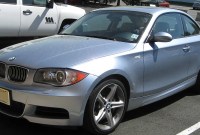

The N54-powered BMW 335i responds to tuning like few engines of its era, which is exactly why so many are bought as build cars. The catch is age: every N54 on the road is now well over a decade old, and adding boost to an engine with a tired fuel system, cracked plastic, or a weeping gasket is the fastest way to turn a cheap build into an expensive one. This guide covers what to fix first, in the order that protects your money.
Is it actually an N54?
Confirm the engine before buying parts. In the United States, the N54 powered the 2007–2010 335i in sedan (E90), wagon (E91), coupe (E92), and convertible (E93) form, and the 2011–2013 335is coupe and convertible. From the 2011 model year the regular 335i switched to the N55, a single twin-scroll turbo engine with different parts and a different tuning path. From the factory the N54 made 300 hp and 300 lb-ft through two small turbochargers.
Step 1: Establish a healthy baseline
Scan the car for stored codes, check for misfires, read the service history, and look underneath for oil. Change the oil before anything else so you start from known-good fluid — the procedure and capacity are in our E90-generation oil change guide. Tuning a car with an unexplained fault code only makes that fault harder to diagnose later.
Step 2: Fix the known weak points
Most N54 horror stories trace back to the same short list of parts. The costs below are the figures The Drive quoted in its N54 reliability guide; labor and prices vary.
| Weak point | Typical symptoms | Why fix it before tuning | Parts cost reference |
|---|---|---|---|
| High-pressure fuel pump | Long cranks, stumbling, reduced-power mode | A tune raises fuel demand the pump must meet | about $571 for the pump |
| Fuel injectors | Misfires, rough idle, fuel smell | Leaking injectors can wash cylinder walls | about $3,514 for a set of six |
| Charge pipe | Sudden power loss, whoosh under boost, limp mode | The plastic factory pipe cracks under higher boost | typically a few hundred dollars |
| Wastegates | Rattle off throttle as the actuators wear | Loose wastegates can hurt boost control | repair kits, or upgraded turbos from about $1,000 |
| Water pump and thermostat | Overheating warnings, sudden cooling failure | An electric pump fails without much warning | about $689 for the kit |
| Gaskets | Oil smell, drips, smoke from the engine bay | Oil on the belt can damage the front main seal | varies by gasket |
High-pressure fuel pump. BMW extended the warranty on this pump to 10 years or 120,000 miles for certain 2007–2008 N54 cars, a sign of how common failures were. That coverage has expired on every car by age, so a replacement pump now comes out of the owner’s pocket.
Injectors. BMW revised the N54’s piezo injectors repeatedly; the final design is known as Index 12. Replacement injectors must be coded into the engine computer with their calibration values, and mixing Index 12 with much older injectors is not recommended. If a car still has early injectors, budgeting for a full set of Index 12 units is sensible before adding boost.
Charge pipe. This is the cheapest and most important boost-related upgrade. The factory plastic pipe between the intercooler and the intake grows brittle with heat, and higher boost is often what finally splits it, usually with an underboost code and limp mode. An aluminum replacement is the standard fix.
Wastegates. Wastegate rattle comes from wear in the actuator arms and flaps. Repair kits exist but require removing the turbochargers, which is why many owners at that point install upgraded turbos instead.

Step 3: Deal with carbon and cooling
Like other direct-injected engines, the N54 builds carbon deposits on its intake valves over time. Walnut-shell blasting is the common cleaning method, and an oil catch can slows the buildup. Replace the electric water pump and thermostat as a pair if the service history cannot show they were done, and fix oil leaks before they reach the belt.
Step 4: Then add power
Only once the fuel system, charge pipe, and cooling are sorted does a tune make sense. A simple tune on a healthy car is the most cost-effective gain the platform offers, and each step beyond that raises the stakes: upgraded turbos, fuel system work, and eventually built internals. Our breakdown of how far the N54 can go maps those stages up to the 9.5-second record. Two supporting details decide whether the extra power stays usable: fuel quality, since a turbocharged engine relies on octane to resist knock (see our octane guide), and tires, which set the limit on how much of that torque reaches the road — covered in our 335i tire guide.
N54 or something simpler?
If the goal is a dependable daily driver rather than a project, an N54 car is a commitment. The naturally aspirated E90 or E92 328i shares the same body and much of the driving character, with a far shorter list of expensive failure points. Choose the 335i when you want the tuning headroom and are prepared to pay for the reliability work first.
Sources: The Drive’s N54 reliability guide; FCP Euro on Index 12 injector replacement; BMW warranty extension details as reported by owner forums and repair specialists, September 2026. Costs are reference points only. Photos: nakhon100 (CC BY 2.0) and Zongxianglee (CC BY 4.0) via Wikimedia Commons.