
Quick summary
- The N52 is a 3.0-liter six without turbochargers, built around a crankcase of magnesium and aluminium.
- US buyers got it in the 128i, 328i, and 528i, with outputs between 215 and 255 horsepower.
- Its two best-documented weak points are oil leaks: the oil filter housing gasket and the valve cover gasket.
Short answer: the N52 is the naturally aspirated six BMW sold through the second half of the 2000s, and it is the engine under most 128i, 328i, and 528i hoods of that era. It was a genuine technical milestone — the first six-cylinder with Valvetronic and the first BMW engine with an electric water pump — and what it asks of owners today is gasket work rather than major repairs.
What is the BMW N52?
A 3.0-liter naturally aspirated inline-six, launched in 2004 and notable mostly for what it was made of. BMW built the crankcase as a magnesium and aluminium composite, which it called the first large-scale production water-cooled crankcase made with magnesium. The weight claims were specific: the composite crankcase weighs 57 percent of a comparable grey cast-iron block and 24 percent less than an all-aluminium one, and BMW described the complete engine at 161 kg as the lightest six-cylinder in its class at the time.
Two other firsts came with it. The N52 was the first six-cylinder to use Valvetronic, BMW’s throttle-less variable valve lift, and BMW’s launch press kit lists the electric water pump as a world premiere on this engine. A magnesium cylinder head cover and lightweight camshafts round out the weight-saving work.
The cars that used it
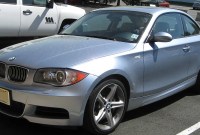
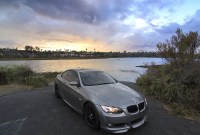
In the US, the models most people mean by “the N52 car” are the E90-generation 3 Series, the 1 Series, and the 5 Series. EPA records for 2009 list a 3.0-liter six in the 128i, 328i (sedan, coupe, convertible, wagon, and xDrive versions), and 528i. Published outputs vary by application rather than by year:
| Model | Output |
|---|---|
| 328i | 230 hp @ 6,500 rpm / 200 lb-ft @ 2,750 rpm |
| 525i | 215 hp @ 6,250 rpm |
| 530i | 255 hp @ 6,600 rpm / 220 lb-ft |
The full buying picture for the most common of those cars is in our E90 and E92 328i guide, including curb weights and the xDrive differences.

What goes wrong on an N52?
Oil leaks, mostly, and two of them are documented well enough to plan around.
Oil filter housing gasket. Independent specialist FCP Euro describes this leak as extremely common across the N52, N54, and N55: the gasket hardens and shrinks with age until oil escapes past it. The reason to fix it early is not the oil loss but where the oil goes — onto the serpentine belt, which can then slip off the crank pulley and be dragged into the front crank seal. Look for oil residue toward the front of the engine and a timing cover coated in oil.
Valve cover gasket. On the magnesium covers, leaks are frequently the result of broken valve cover bolts. Oil reaching the spark plug wells causes rough running and misfires, and a failing Valvetronic motor seal lets oil pool in the centre cavity of the cover — a separate fault with a similar symptom.
The water pump, honestly. The electric pump was new technology on this engine, and owners and independent shops widely treat it as a wear item worth replacing proactively with the thermostat. What does not exist in public is a published failure-rate figure, so treat mileage thresholds you see quoted as workshop experience rather than data. If the service history cannot show the pump was done, budget for it.
Buying one today
For a car of this age, yes — with the caveat that “reliable” means a short, known list of jobs rather than no jobs at all. The N52 has no turbochargers, no high-pressure fuel pump, and no direct-injection carbon problem, which is exactly what separates it from the twin-turbo N54 that replaced it in the sportier cars; our N54 feature shows what that engine trades for its power. Routine care is cheap by BMW standards, and the E90 oil change guide covers the intervals and parts that matter.
Sources: BMW Group press materials for the magnesium-composite inline-six (construction, weights, Valvetronic and electric water pump firsts) and BMW US model data for the 328i, 525i, and 530i; EPA fueleconomy.gov model lists; FCP Euro technical articles on N51/N52 oil filter housing and valve cover gasket leaks. October 2026. Photos: Jiří Sedláček and IntelPentiumMMX via Wikimedia Commons, CC BY-SA 4.0.