

Octane measures how well gasoline resists knock — not how much energy it holds. Premium is not a stronger fuel; it is a more knock-resistant one. That single distinction decides whether paying extra at the pump does anything for your car, and for most cars the answer is no.
Category: Car Tips

The Real Cost of Owning an Electric Car in 2026
An electric car usually costs more to buy and less to run. Whether it saves money overall depends on three things that vary by driver: how much you pay for electricity, how much you drive, and how fast the car loses value.
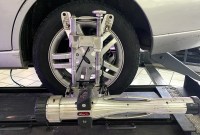
Camber, Caster, and Toe: Wheel Alignment Angles Explained
A wheel alignment adjusts three angles: camber, caster, and toe. Each one describes how a wheel is tilted or pointed relative to the car, and each affects something different — tire wear, steering feel, or straight-line stability.

What Is the Kia X-Line? Design-Focused Trim Explained
Let’s start with a simple truth: not everyone who buys an SUV dreams of crawling over rocks or splashing through deep mud. For a lot of people, the appeal is […]

EV Charging Levels Explained: Level 1, Level 2, and DC Fast
EV charging comes in three levels, and the difference between them is not just speed — it is where the electricity is converted and who controls how fast it flows. Level 1 and Level 2 deliver alternating current that the car converts itself; DC fast charging does the conversion in the station.

Dodge Charger Engines: From the 426 Hemi to the Sixpack
The Dodge Charger has worn three very different engine philosophies: big-block V8s in the 1960s, supercharged Hemi V8s in the modern sedan, and today a choice between a twin-turbo inline-six and a battery-electric drivetrain.

Is the Manual Transmission Dead? Where Stick Shifts Stand
The manual transmission is not dead, but it has changed jobs. It used to be the cheap, efficient choice; today it is almost exclusively an enthusiast’s option, offered on roughly two dozen US models and chosen by a small but loyal group of buyers.